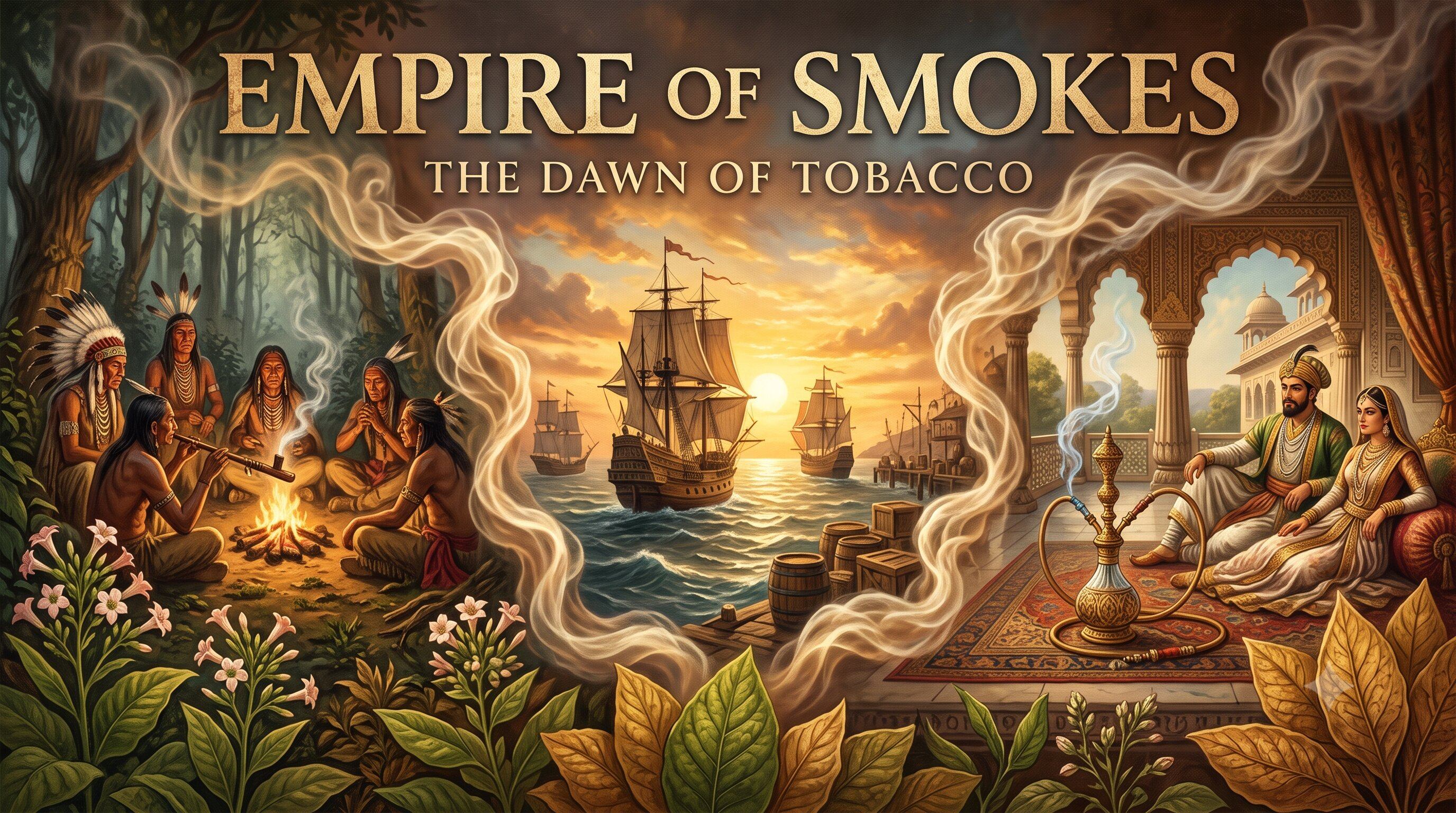
AS I promise last time, I am back with part 2 of the tobacco. In this part, you will read how China got addicted to the tobacco and modern day health crisis it is causing around the world.
The Golden-Silk Smoke
While tobacco was busy conquering the royal courts of India and the plantations of the Americas, vast, churning maritime trade routes brought the plant to the shores of Ming Dynasty China. Arriving between 1550 and 1650, it was introduced via two primary channels: Spanish galleons heavily laden with silver sailing from the Philippines to Fujian, and Portuguese merchants operating out of the bustling trading hub of Macau.
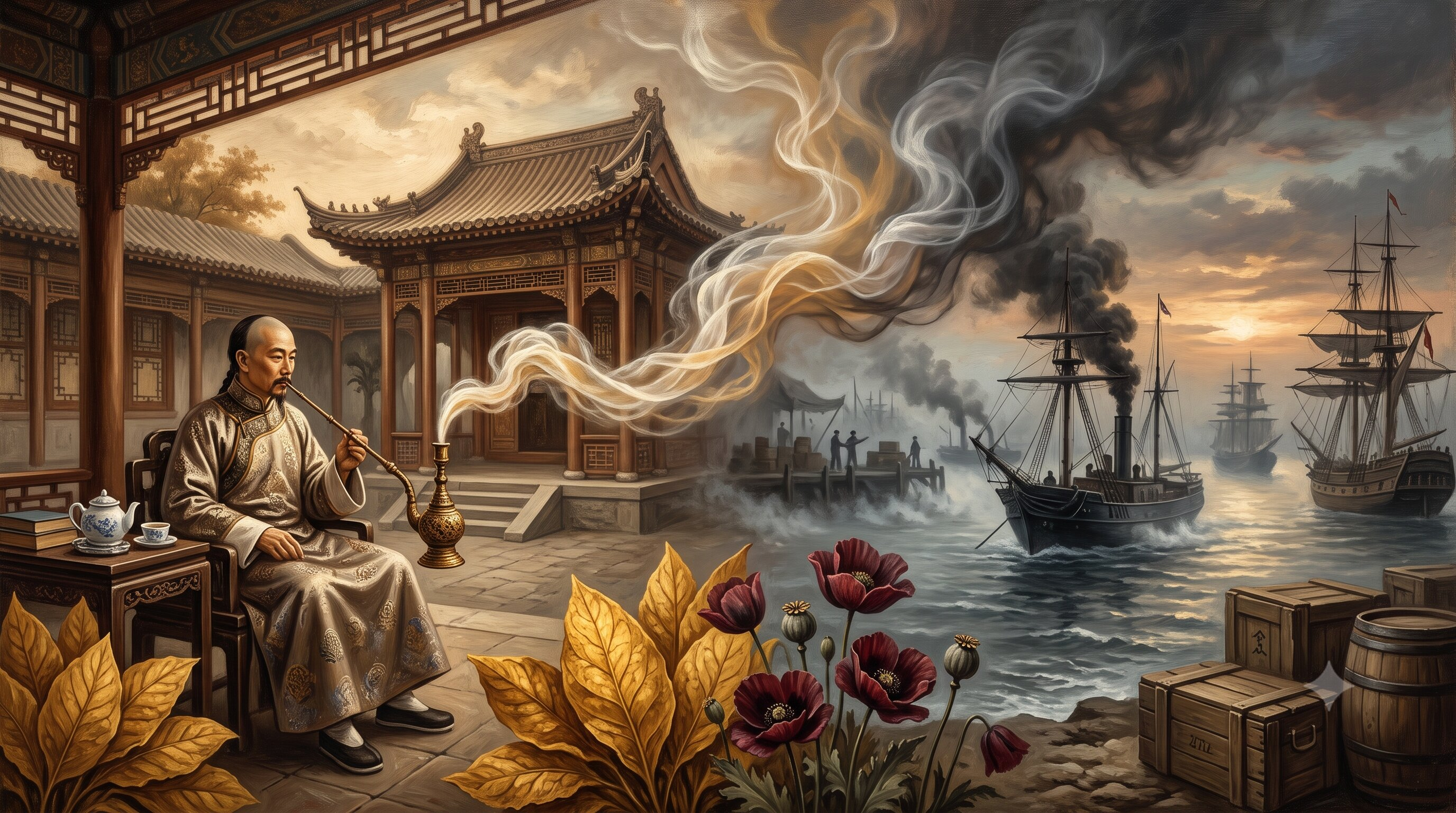
In China, the plant was met with a poetic, almost romantic reverence. Because the specific strains cultivated by local farmers yielded finely shredded, bright yellow leaves when dried, the Chinese affectionately dubbed it “Golden-Silk Smoke.”
The integration of tobacco into Chinese society was remarkably swift, largely because it was rapidly absorbed into the highly structured, pre-existing framework of traditional Chinese medicine. Unlike European doctors who viewed it mostly as a dirty vice or a crude stimulant, Chinese literati and physicians eagerly debated its energetic properties. It was meticulously logged into medical texts and pharmacopeia as an herb capable of dispelling cold dampness from the body, circulating qi (vital energy), alleviating the shivering symptoms of malaria, and aiding digestion after a heavy banquet.
The Medicine
Through the turbulent transition from the Ming to the Qing Dynasty, China developed a highly stylized, distinct smoking culture all its own. They did not adopt the heavy European cigar or the rustic Indian bidi. Instead, the Chinese favoured incredibly elegant, long-stemmed dry pipes made of bamboo and jade, and eventually adopted intricately designed water pipes made of shining brass and paktong (copper-nickel).
Smoking became entirely synonymous with hospitality and polite society. Offering a freshly packed pipe to a guest crossing your threshold became as standard and expected a greeting as offering a hot cup of tea. It was a required tool of the literati, smoked thoughtfully while brushing calligraphy, writing poetry, or debating complex philosophy. The massive population was primed, culturally habituated, and entirely comfortable with the physical act of inhaling smoke deep into their lungs. Tragically, this elegant cultural groundwork would soon be hijacked to bring the empire to its knees.
The Trojan Horse of Opium
By the late 18th century, the British East India Company faced a massive economic crisis. The British public was hopelessly addicted to Chinese tea, silk, and porcelain, but the Qing Dynasty had little interest in buying British manufactured goods. China demanded to be paid in solid silver. To reverse this crippling trade deficit, the British turned to a dark, highly lucrative alternative: opium, grown cheaply in their colonial holdings in India.
However, the Chinese did not naturally take to smoking pure opium. The bridge between a sober society and a shattered one was tobacco.
Enterprising merchants began mixing raw opium with processed tobacco to create a blend called madak. Because millions of Chinese citizens were already deeply habituated to smoking tobacco out of bamboo and brass pipes, the transition to smoking madak felt entirely natural. It was a familiar, comforting ritual, now carrying a deeply addictive, narcotic payload. Over time, as users built a tolerance, the tobacco was slowly phased out, and the pure, highly potent smoking of raw opium took over. Tobacco was the Trojan Horse that smuggled the opium epidemic directly into the lungs of the Chinese populace.
The Century of Humiliation
The results were apocalyptic. Addiction ravaged all levels of Chinese society, from powerful court officials and military generals down to peasant farmers. When the Daoguang Emperor finally attempted to enforce a strict ban on the opium trade in 1839 and destroyed massive British stockpiles in Canton, the British Empire responded with devastating military force.
The resulting First and Second Opium Wars shattered the myth of Chinese imperial invincibility. British gunboats decimated the antique Chinese naval fleet. The Qing government was forced to sign unequal treaties, cede the island of Hong Kong, and open its ports entirely to foreign trade including the unrestricted, legalized sale of opium. This triggered a period known today as the “Century of Humiliation,” a time of immense suffering, poverty, and societal decay, all sparked by a foreign power weaponizing a smoking habit.
The Dealer State
The final chapter of China’s turbulent relationship with tobacco was written with the rise of the Chinese Communist Party (CCP) in 1949. Realizing the staggering financial power of the habit they had inherited, the state eventually consolidated the entire fragmented industry. In 1982, they officially formed the China National Tobacco Corporation (CNTC). Today, it is the undisputed titan of the global tobacco trade, holding an absolute monopoly over the world’s largest market.
The nation is now both the world’s largest consumer and producer. Because the CNTC is a state-owned entity, tobacco revenue provides a massive percentage of the Chinese government’s annual funding. This creates a chilling, almost insurmountable conflict of interest: the very government tasked with regulating public health and protecting its citizens from cancer relies heavily on the daily addiction of hundreds of millions of its people to fund its infrastructure and military.
The Cost
Today, the global tobacco market is an absolute financial juggernaut, valued at roughly $1 Trillion in 2025. China and India sit at the very centre of this modern epidemic, reigning as the undisputed titans of consumption.
However, this massive economic footprint comes at a horrific human cost. The World Health Organization (WHO) considers the tobacco epidemic one of the biggest public health threats in history, responsible for over 7 million deaths globally every single year.
India alone, the second largest consumer of tobacco in the world, accounts for nearly 1.35 million deaths annually. The healthcare burden on these developing economies is crippling. In India, the economic costs of treating diseases and premature deaths attributable to tobacco eat up more than 1% of the entire nation’s GDP.
The WHO strongly recommends that governments raise taxes so that they represent at least 75% of the retail price of a country’s most popular cigarette brands, a measure proven to deter consumption. Yet, the two biggest markets continually fail to meet this life-saving standard. We can only hope that Governments around world the wake up to this epidemic and take actions to curb it.
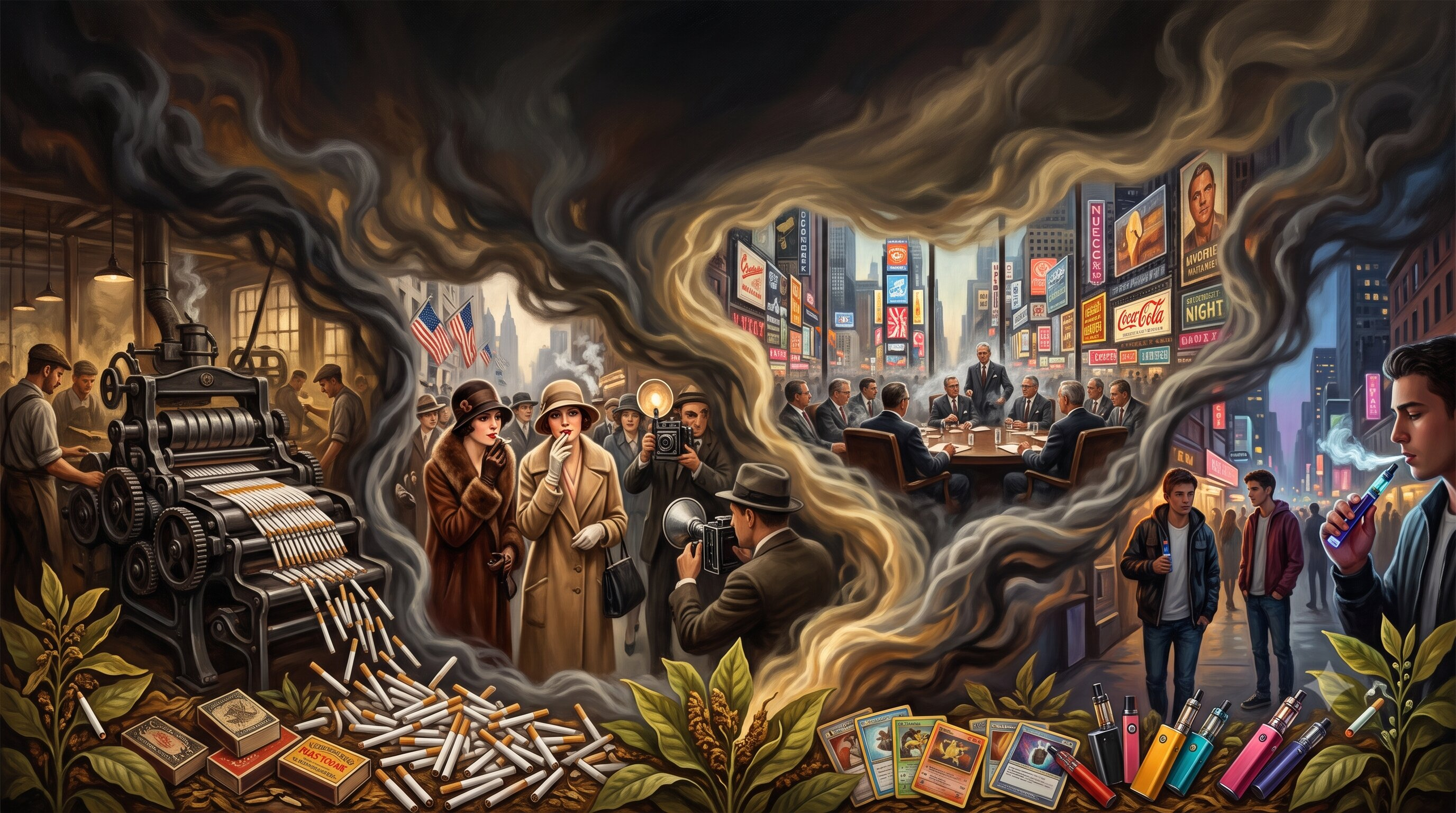
While India and China spent centuries refining the aesthetic rituals of smoking and dealing with its colonial fallout, the United States was quietly engineering a different kind of weapon. The modern crisis of mass addiction wasn’t born in China or India; it was born in an American machine shop.
In Part 3, we will cross the Pacific to explore the invention of the mechanical cigarette roller, the cynical birth of modern public relations, and how Western “Big Tobacco” successfully hacked the human psyche to sell poison for over a century. Till then, Bye!