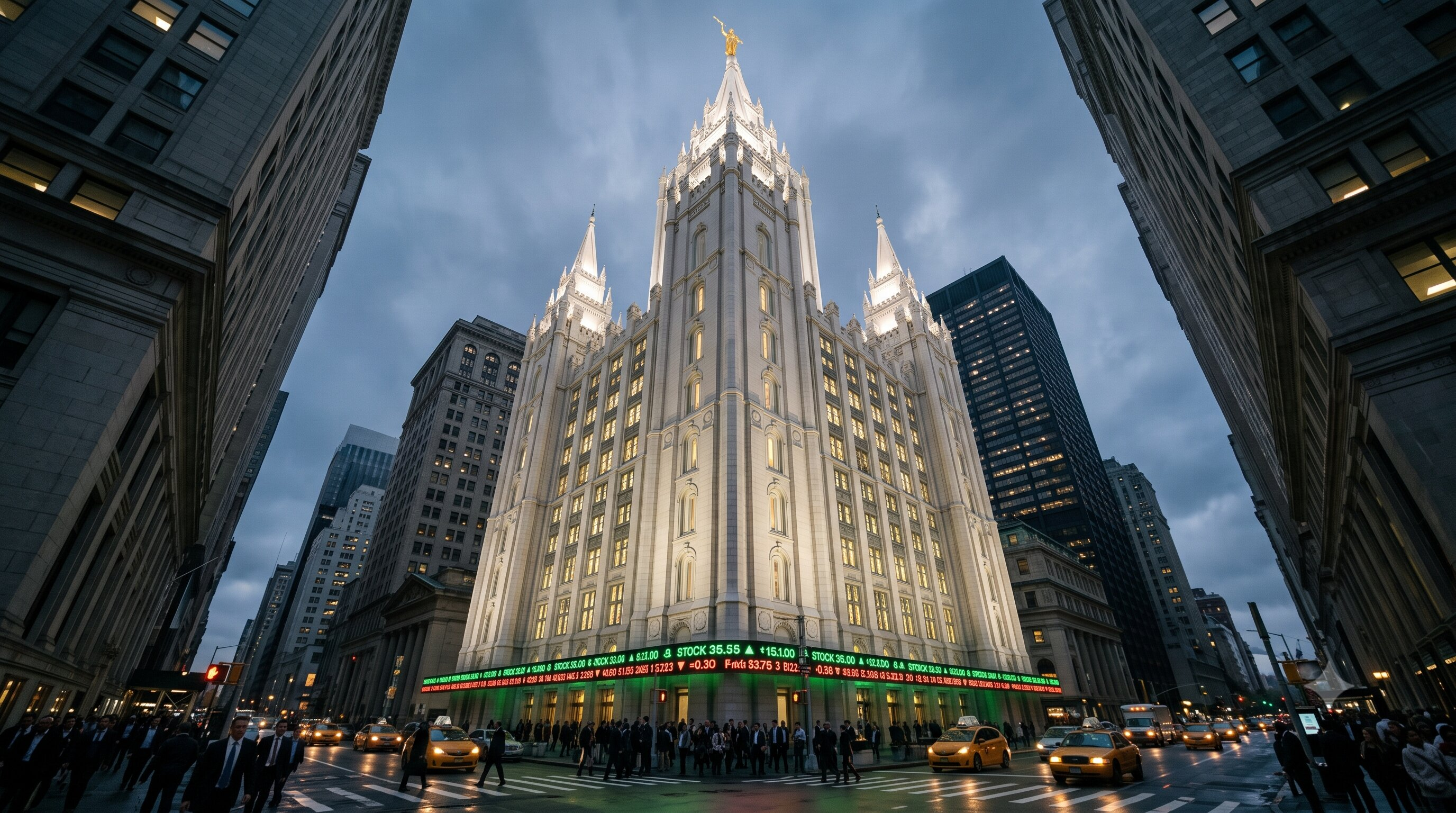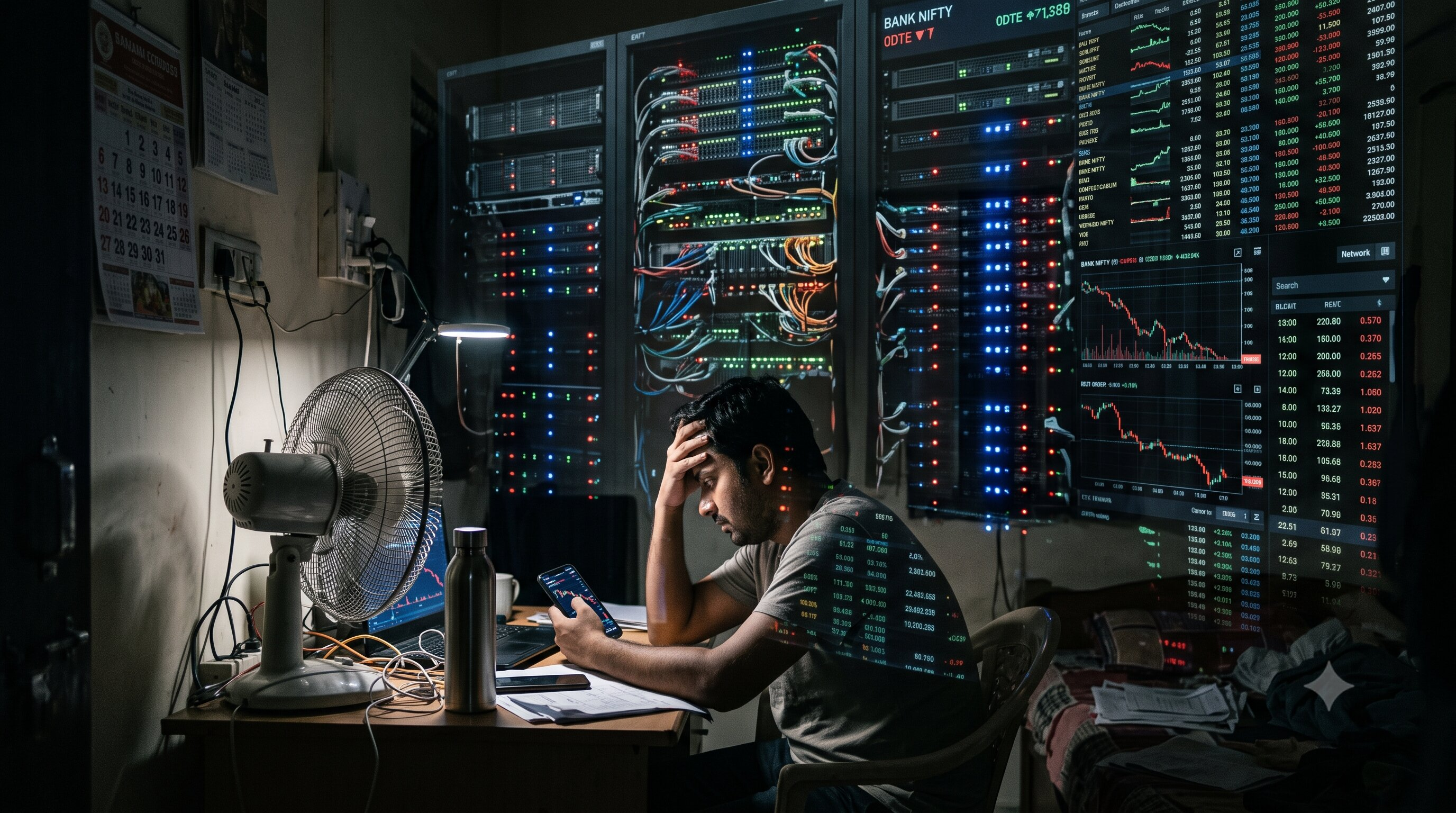
This time, I’m telling you a story of a silent, high-stakes war fought not with guns, but with fibre-optic cables, microwave towers, and lines of ruthless code.
This is the story of how a single foreign quant firm tapped into an emerging market’s blind spot, turning a nation’s historic economic boom into a private goldmine and leaving a trail of shattered retail fortunes in its path.
This is the first part of the story.
How India Became the World’s Options Casino
In most developed financial markets, derivatives like futures and options serve a very specific, secondary purpose: they are tools used by institutions to hedge risk or speculate on the price of a deep, liquid underlying cash market. In India, that relationship inverted completely. Driven by a surge of retail participation, the derivatives market ballooned to 300 to 350 times the size of the underlying cash equity market.
By 2024, India accounted for a staggering 89% of all global equity options volume, surpassing the mighty S&P 500 in daily notional turnover. But this historic boom masked a quiet financial tragedy. Over a five-year period ending in March 2026, Indian retail investors lost a cumulative ₹3.85 lakh crore (over $44 billion) in the options market.
To understand how one of the world’s best-performing equity bull markets became a wealth destruction machine for everyday traders, we have to look at the explosive rise of the retail trader, the arrival of ultra-fast Wall Street algorithms, and the dangerous structural anomaly that brought them together.
The Zero-Barrier Trap
Historically, global quantitative funds and high-frequency trading (HFT) firms avoided India. The frictions were too high. Strict leverage restrictions, high Securities Transaction Taxes (STT), and lagging exchange infrastructure made India an unappealing destination for algorithms that rely on executing millions of trades for micro-pennies in profit.
That all changed in the late 2010s and early 2020s. The National Stock Exchange (NSE) heavily upgraded its co-location servers and high-speed APIs, modernizing the plumbing of the market. At the exact same time, a retail revolution was brewing.
Fuelled by zero-commission mobile brokerages, pandemic-era lockdowns, and an army of social media “fin-fluencers” pitching day trading as an easy second income, the Indian options market caught fire. Between 2019 and 2026, the number of individual derivatives traders surged from fewer than 1 million to nearly 8 million.
The product of choice became the Zero-Day-to-Expiration (0DTE) option. These are contracts that expire on the exact same day they are traded. Because India restricted traditional leverage in the cash market, retail traders used out-of-the-money options on expiry day as a cheap substitute. For just a few rupees in premium, a trader could get 100x effective leverage on the bank Nifty or Sensex.
It felt like a cheap lottery ticket. But in reality, everyday investors were stepping into the most complex, cutthroat segment of modern finance, completely unprotected. Historically, India had virtually no entry barriers for trading complex derivatives—no financial sophistication tests and no high-net-worth requirements. Anyone with a smartphone could fund an account and immediately start trading institutional-grade derivatives.
Enter the Machines: The Triple Asymmetry
Modern financial markets are not human-to-human arenas. Roughly 75% of global trading volume is fully automated, operating inside massive, fan-cooled data centres. HFT firms spend hundreds of millions of dollars laying undersea fibre-optic cables and building microwave towers to shave nanoseconds (billionths of a second) off their execution times, because microwave signals travel through the air faster than light travels through glass fibre.
When 8 million Indian retail traders opened their smartphone apps, they were unwittingly trading directly against elite global quant giants like Citadel Securities, Jump Trading, and Hudson River Trading. This created a massive, one-way wealth transfer driven by a “Triple Asymmetry”:
-
Understanding: Retail traders lacked a deep grasp of complex options pricing math, particularly implied volatility crush and time decay (theta), which rapidly drains the value of an option as the daily closing bell approaches.
-
Technology: A retail trader relying on a 4G connection and a mobile app faces millisecond latency. The algorithms on the other side of the trade are co-located inside the exchange’s own servers, reacting in nanoseconds.
-
Capital: Retail traders were operating on thin personal margins, vulnerable to being wiped out by a single bad swing. HFT firms deploy multi-billion-dollar balance sheets, allowing them to absorb shocks and move massive underlying stock volumes.
The Mumbai Orange Market Analogy
To understand why regulators initially welcomed these HFT firms, it helps to look at how arbitrage works using a simple analogy: the Mumbai fruit market.
Imagine two fruit stalls in different neighbourhoods selling identical oranges. Stall A is selling oranges for ₹100 per kilogram, while Stall B is charging ₹110. A smart trader (the arbitrageur) spots this gap. They immediately buy a massive quantity of oranges at Stall A, which raises demand and pushes the price up. Simultaneously, they sell those oranges at Stall B, increasing supply and pushing the price down.
The trader pockets a small, risk-free profit. But more importantly, the broader market benefits: the price of oranges stabilizes at a fair ₹105 everywhere. High-frequency algorithms do this exact routine millions of times a second across global stock exchanges. By linking prices and quoting on both sides of the order book, they provide vital liquidity, ensuring that when a human investor wants to buy or sell, there is always someone there to take the trade.
However, in India, this healthy dynamic became toxic. Because the side market (the options contracts) became 300 times larger than the physical market (the actual stocks), the sheer weight of the derivatives book began warping the price of the underlying companies. As we will explore later in this series, this structural imbalance created scenarios where algorithms could arguably weaponize the underlying cash market simply to trigger massive payouts on their options bets.
The August 2026 Reality Check
The result of this mismatched battlefield was one of the largest retail wealth transfers in modern financial history.
In August 2026, India’s Finance Ministry presented a devastating dataset to the parliament (Rajya Sabha), detailing the exact human cost of the F&O boom. The numbers laid bare the brutal reality of competing against the machines:
- The $44 Billion Wipeout: Over the five-year period from FY22 to FY26, Indian retail F&O traders racked up a staggering cumulative net loss of ₹3.85 lakh crore (over $44 billion).
- A Shrinking, Bleeding Crowd: Following strict regulatory interventions by the Securities and Exchange Board of India (SEBI) in late 2024 and 2025, nearly 2 million casual traders were priced out of the market. Yet, the 7.86 million traders who remained in FY26 suffered an aggregate loss of ₹91,685 crore ($11 billion).
- Record Individual Losses: Because the surviving traders were forced to trade larger contract sizes to comply with new SEBI rules, the average loss per retail trader hit a five-year record high in FY26, climbing to ₹1,16,654 (approx. ₹1.17 lakh).
In the financial year ending March 2024, algorithmic trading firms operating in India generated approximately $7 billion in gross profits from options—a figure that mirrored almost dollar-for-dollar what retail traders lost during the same window.
Yet, the algorithms were not the only winners. As retail traders bled capital, the government collected a massive windfall. Following aggressive hikes to the Securities Transaction Tax (STT) in the Union Budget, government STT revenue collected from F&O trading surged by 250% in a single year, rocketing from ₹7,893 crore in FY25 to an astounding ₹27,695 crore in FY26.
By mid-2026, the Indian options market had functionally become a wealth extraction machine, transferring billions from the savings accounts of the middle class directly into the tax coffers of the government and the balance sheets of elite trading firms.
It was a structural anomaly that was too lucrative to ignore. And as the retail frenzy reached its absolute peak in early 2024, one of Wall Street’s most secretive and profitable trading firms realized exactly how to exploit the fragility of this market design—sparking a multi-billion dollar clash with Indian regulators that is still playing out in the courts today.
In Part 2, we will break down the controversial $4.3 billion payday of Wall Street quant giant Jane Street, the specific 8-minute trade that triggered a nationwide ban, and the blurry line between textbook arbitrage and market manipulation. Till then, Bye!